Small Bathroom Clawfoot Tub Shower
Small Bathroom Clawfoot Tub Shower
When we think of clawfoot bathtubs, we think of luxury: deep baths you could spend all day in, with candles (and maybe a glass of Champagne). Aesthetically, we tend to prefer freestanding baths over built-in versions: they feel classic and timeless in any washroom.
But there are, we admit, a few practical downsides that could outweigh the positives. If any of the following 10 apply to you, you may want to rethink springing for a freestanding bathtub. (And remember that it's always a good idea to take a test drive: if possible, climb into a tub to check it out before committing.)
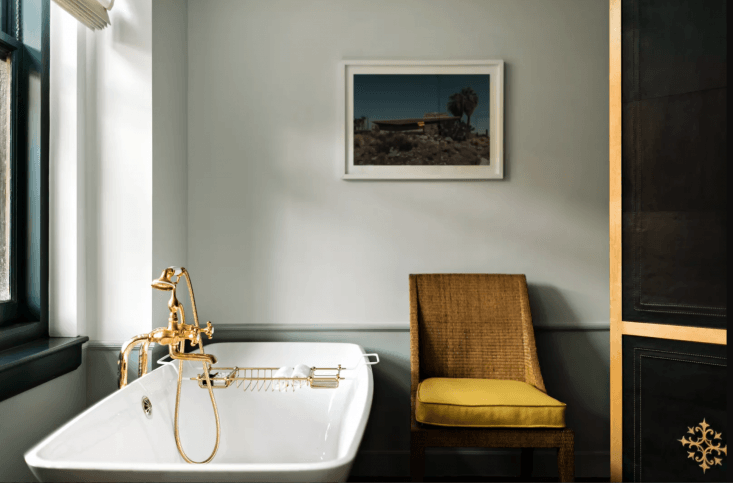
First, take note of terminology: "Traditionally, claw-foot baths had a Victorian-style ball-and-claw design, but today any tub on feet is often called a claw-foot," writes our correspondent Barbara Peck in Remodeling 101: Romance in the Bath: Built-In vs. Freestanding Bathtubs. And, not all freestanding baths have feet at all: some of the more modern, sleek versions sit flush on the floor. Nevertheless, if you're mulling over a freestanding clawfoot bathtub instead of a built-in, most of these considerations apply.
1. You like keeping soap within arm's reach.

Picture this: you're just getting into a hot bath, sink in, lean back, and start to relax, only to realize you can't reach the shampoo. A feature of built-in bathtubs that's often taken for granted is the ledge around two or three sides of the tub for stashing soap, shampoo, cloths, and candles. If you opt for a freestanding bath, you'll find you need to come up with clever new ways to keep essentials within reach—a solvable problem, for sure, but a consideration to keep in mind.
2. You're envisioning long, hot baths.
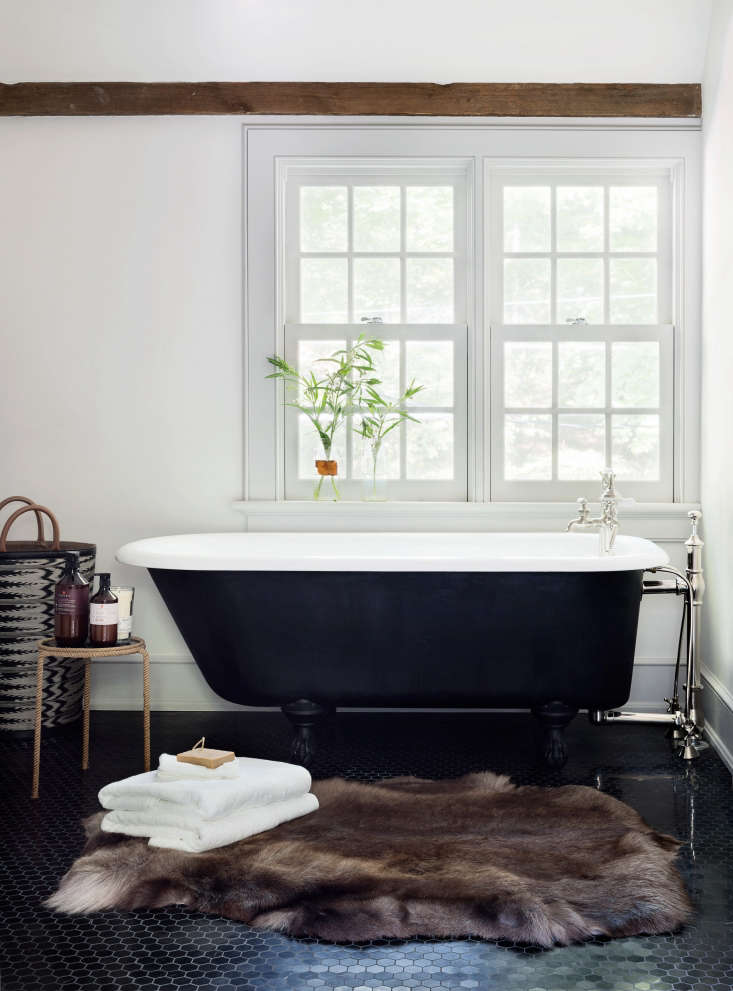
Old clawfoot bathtubs are often associated with long, luxurious baths, but unless you're OK with baths that are brieflyluxurious, you may want to opt for a newer model. "Some say that the bathwater in a freestanding tub will cool faster, since it's surrounded by air," writes Barbara in Remodeling 101: Built-In vs. Freestanding Bathtubs. "If you want to ensure long, hot baths, consider a built-in, where the insulation added to the wall behind it will keep the water warm even longer, or an acrylic model, which will hold the heat longer than cast iron." (Or, just add more hot water as it cools.)
3. You have a petite bathroom.
If size is a consideration in your bath, keep in mind that older, freestanding baths tend to take up more space: they're often bigger than built-in models, and are generally installed with some space between the bath and the wall. Plus, hardware will take up extra room (see: point no. 4). Built-in options can go a longer way towards fitting a bath into a tight space.
4. You like your hardware streamlined.

Renovators (particularly those with minimalist taste) should know that the hardware in a freestanding bath will be more out in the open than in a built-in bath, where faucets and pipes can be set into the wall. The good news: there are plenty of good-looking fixtures on the market, including sleeker, more streamlined versions for those with modern tastes.
Small Bathroom Clawfoot Tub Shower
Source: https://www.remodelista.com/posts/freestanding-clawfoot-tubs-baths-pros-cons/


Tidak ada komentar:
Tulis komentar